
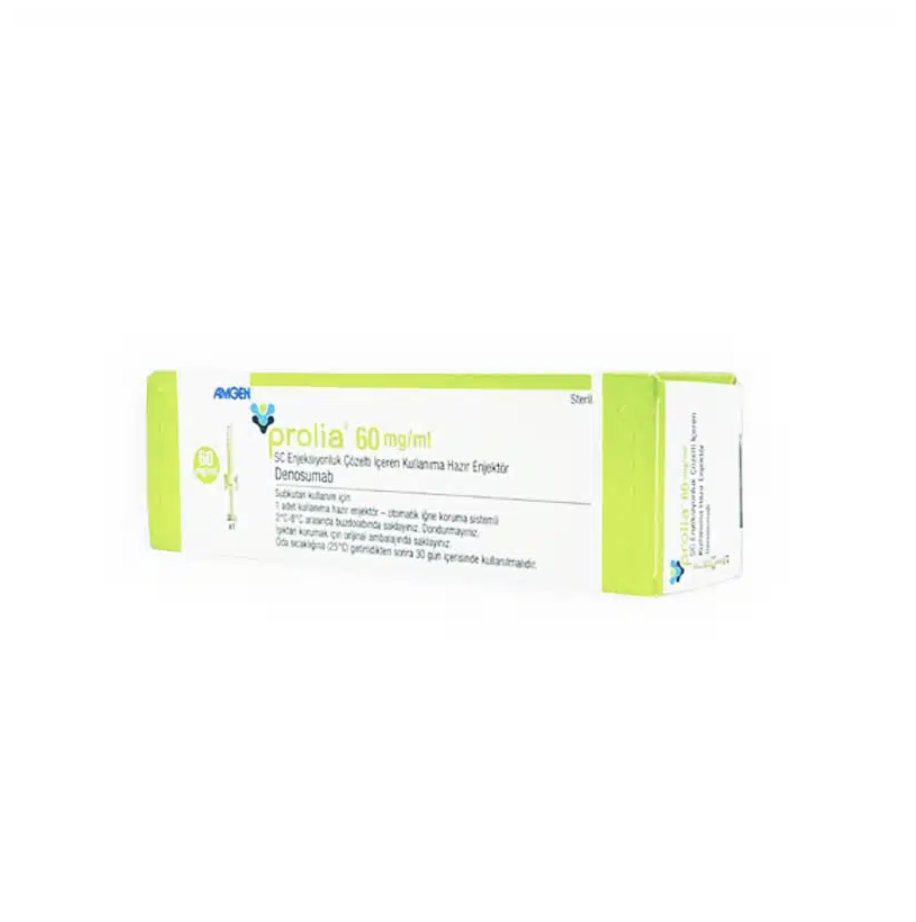
Prolia® (denosumab) is a prescription medication used to treat osteoporosis and bone loss in adults at high risk of fracture. It is a monoclonal antibody that works by inhibiting RANK ligand, a protein responsible for bone breakdown, thereby increasing bone mass and strength.
“Non-English” Version Notes
When Prolia is listed as “Non-English” (e.g., in international pharmaceutical marketplaces), it generally indicates that the packaging, labeling, and patient information leaflets are in a language other than English (such as German, French, or Spanish), although the medication itself is manufactured by Amgen.
Key Information About Prolia:
Administration: It is given as a 60 mg subcutaneous injection (under the skin) once every six months, usually in the abdomen, thigh, or upper arm.
Uses:
Treatment of osteoporosis in postmenopausal women at high risk of fracture.
Treatment of osteoporosis in men at high risk of fracture.
Treatment of bone loss in men with prostate cancer receiving hormone-depleting therapy.
Treatment of bone loss in women with breast cancer receiving aromatase inhibitor therapy.
Treatment of bone loss associated with long-term systemic glucocorticoid therapy.
Safety Information:
Contraindications: Do not use if you have severe, uncorrected hypocalcemia (low blood calcium).
Warnings: Potential risks include severe low calcium (hypocalcemia), osteonecrosis of the jaw (jaw bone death), and atypical femoral fractures.
Discontinuation: Stopping Prolia can increase the risk of breaking bones, particularly in the spine.
Biosimilars: As of late 2025, several biosimilars for Prolia (such as Jubbonti and others) have been approved as interchangeable in various regions.




Reviews
There are no reviews yet.