
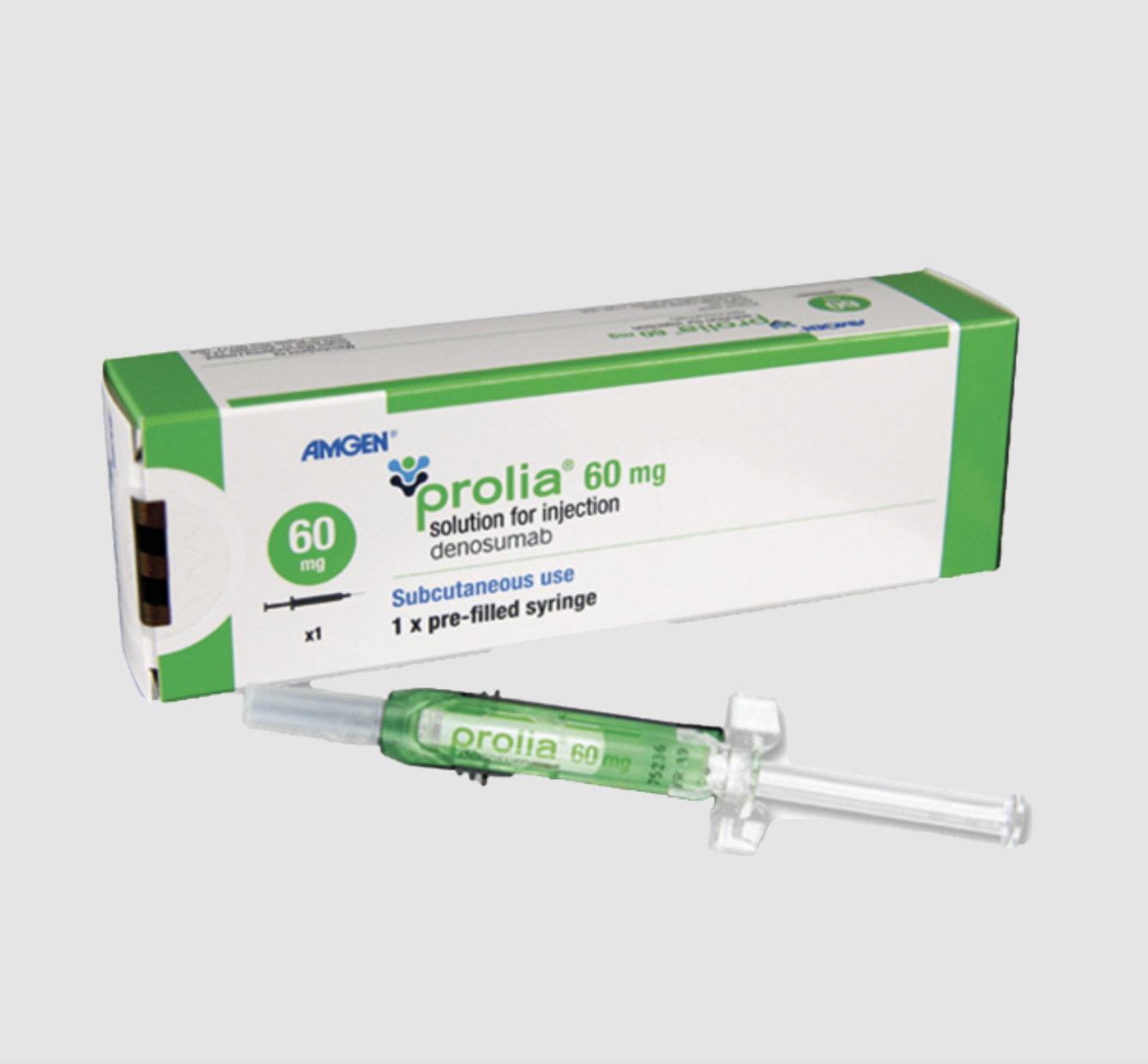
Prolia® (denosumab) is a prescription medicine used to treat osteoporosis (thinning of the bones) in postmenopausal women and in men who are at high risk for bone fractures. It acts as a RANK ligand (RANKL) inhibitor, reducing the formation and activity of cells that break down bone, thereby increasing bone mass and strength.
Key Description & Mechanism:
Active Ingredient: Denosumab.
Drug Class: RANKL inhibitor (a type of monoclonal antibody).
Administration: It is given as a 60 mg subcutaneous injection (under the skin) by a healthcare professional, usually in the upper arm, thigh, or abdomen, once every 6 months.
Approved Uses:
Treatment of osteoporosis in postmenopausal women and men at high risk for fracture.
Treatment of bone loss in men with prostate cancer and women with breast cancer receiving hormone-lowering treatments.
Treatment of glucocorticoid-induced osteoporosis.
Key Requirements: Patients must have sufficient calcium and vitamin D intake while using Prolia to avoid low calcium levels (hypocalcemia).
Warnings & Important Information:
No Interruption: It is crucial not to skip, delay, or stop treatment without consulting a doctor, as doing so increases the risk of “rebound” fractures, especially in the spine.
Side Effects: The most common side effects include back pain, joint and muscle pain in the arms or legs, infections (e.g., urinary tract or skin infections), and high cholesterol.
Rare Serious Risks: Potential rare, serious side effects include osteonecrosis of the jaw (jawbone damage), atypical femur fractures (unusual thigh bone fractures), and severe hypocalcemia.
Pregnancy: Prolia should not be used during pregnancy as it may cause harm to the fetus.



Reviews
There are no reviews yet.