
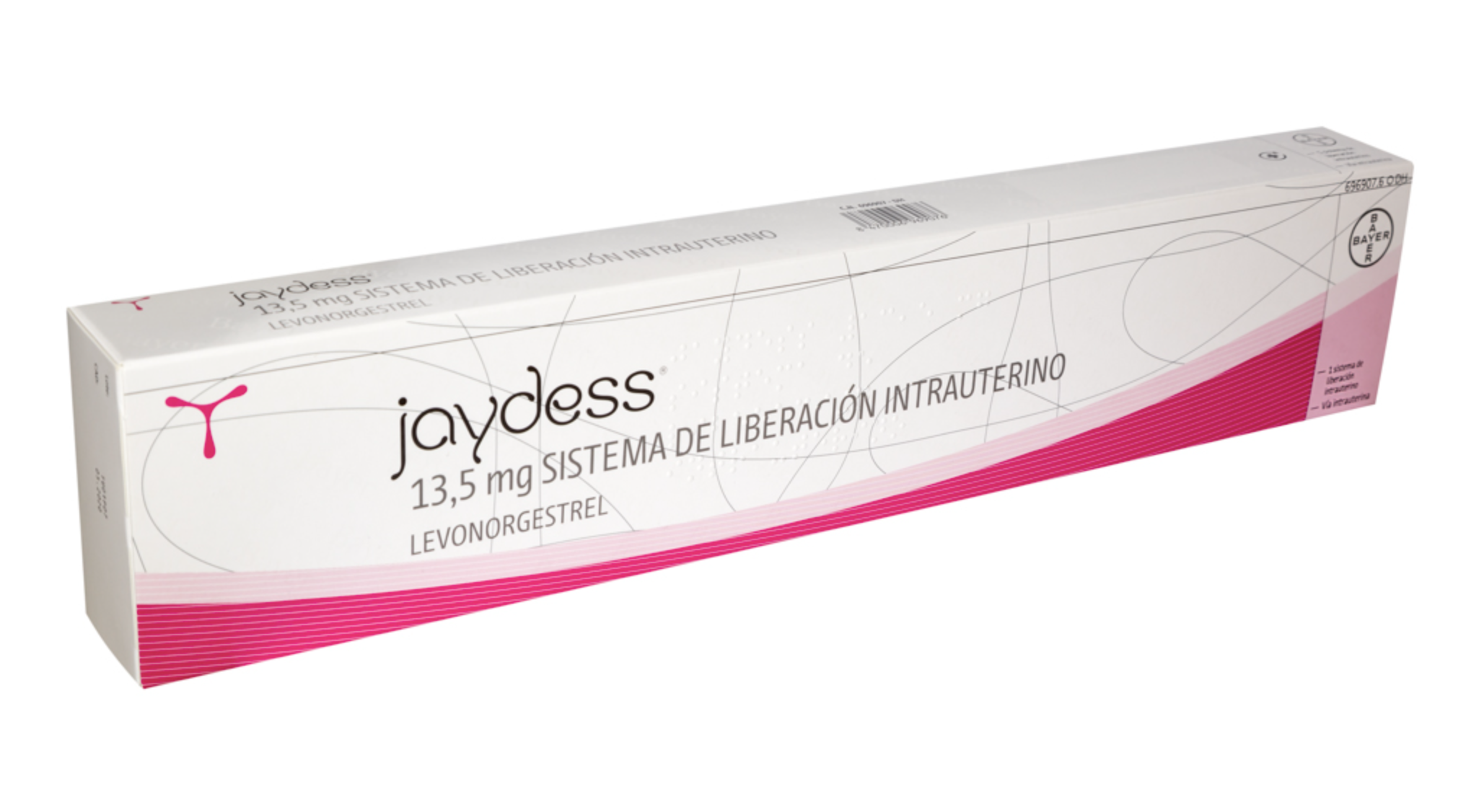
Jaydess® is an intrauterine device consisting of a hormone capsule attached to a T-shaped frame made from a soft flexible plastic. The device is 30 mm long and is inserted inside the uterus using an inserter. Jaydess® is the smallest three year hormone coil available and contains a low dose of hormone (6 µg levonorgestrel/24h). Your midwife/physician inserts it into your uterus, where it protects against unwanted pregnancy. By slowly releasing a low dose of the progestogen hormone levonorgestrel locally in the uterus, daily for up to 3 years, you will not have to think about daily, weekly or monthly administration.
Jaydess is used for the prevention of pregnancy (contraception) for up to three years.
Jaydess is a T-shaped intrauterine delivery system (IUS) which after placement inside the womb slowly releases a small amount of the hormone levonorgestrel.
Jaydess works by reducing the monthly growth of the lining of the womb and thickening the cervical mucus. These actions prevent the sperm and egg from coming into contact and so prevent fertilization of an egg by sperm.
General notes
Before you can begin using Jaydess, your healthcare professional will ask you some questions about your personal health history.
In this leaflet, several situations are described where Jaydess should be removed, or where the reliability of Jaydess may be decreased. In such situations you should either not have intercourse or you should use a condom or another barrier method.
Jaydess, like other hormonal contraceptives, does not protect against HIV infection (AIDS) or any other sexually transmitted disease.
Jaydess is not suitable for use as an emergency contraceptive (postcoital contraceptive).
Do NOT use Jaydess if you:
are pregnant (see section “Pregnancy, breast-feeding and fertility”)
currently have a pelvic inflammatory disease (PID; infection of the female reproduction organs) or have had this condition multiple times in the past
have conditions associated with increased susceptibility to pelvic infections
have an infection in the lower genital tract (an infection in the vagina or the cervix [neck of the womb])
have had an infection of the womb after delivery of a child, after an abortion or after miscarriage during the past 3 months
currently have cell abnormalities in the cervix
have cancer or suspected cancer of the cervix or womb
have tumours which are sensitive to progestogen hormones to grow, e.g, breast cancer
have unexplained uterine bleeding
have an abnormality of the cervix or womb including fibroids that distort the cavity of the womb
have an active liver disease or liver tumour
are allergic to levonorgestrel or any of the other ingredients of this medicine (listed in section 6).
Starting to use Jaydess
Before Jaydess is inserted, it needs to be ensured that you are not pregnant.
You should have Jaydess inserted within 7 days from the start of your menstrual period. When Jaydess is inserted on these days, Jaydess works right away and will prevent you getting pregnant.
If you cannot have Jaydess inserted 7 days from the start of your menstrual period or if your menstrual period comes at unpredictable times, then Jaydess can be inserted on any other day. In this case, you must not have had sexual intercourse without contraception since your last menstrual period, and you should have a negative pregnancy test before insertion. Also, Jaydess may not reliably prevent pregnancy right away. Therefore, you should use a barrier method of contraception (such as condoms) or abstain from vaginal intercourse during the first 7 days after Jaydess is inserted.
Jaydess is not suitable for use as an emergency contraceptive (postcoital contraceptive).
Contact your healthcare professional immediately if you notice any of the following symptoms:
allergic reactions including rash, hives (urticaria) and angioedema (characterized by sudden swelling of e.g. the eyes, mouth, throat)
Very common side effects: may affect more than 1 in 10 people
headache
abdominal / pelvic pain
acne / greasy skin
bleeding changes including increased and decreased menstrual bleeding, spotting, infrequent periods and absence of bleeding (see also following section on irregular or
infrequent bleeding)
ovarian cyst (see also following section on ovarian cyst)
inflammation of the external genital organs and vagina (vulvovaginitis)
depressed mood / depression
decreased libido
migraine
feeling sick (nausea)
hair loss
upper genital tract infection
painful menstruation
breast pain / discomfort
device expulsion (complete and partial) – (see the following section on expulsion)
genital discharge
increased weight
Uncommon side effects: may affect up to 1 in 100 people
dizziness
excessive body hair
perforation of the womb (see also following section on perforation)


Reviews
There are no reviews yet.